Every job below is one we do ourselves across El Cajon.
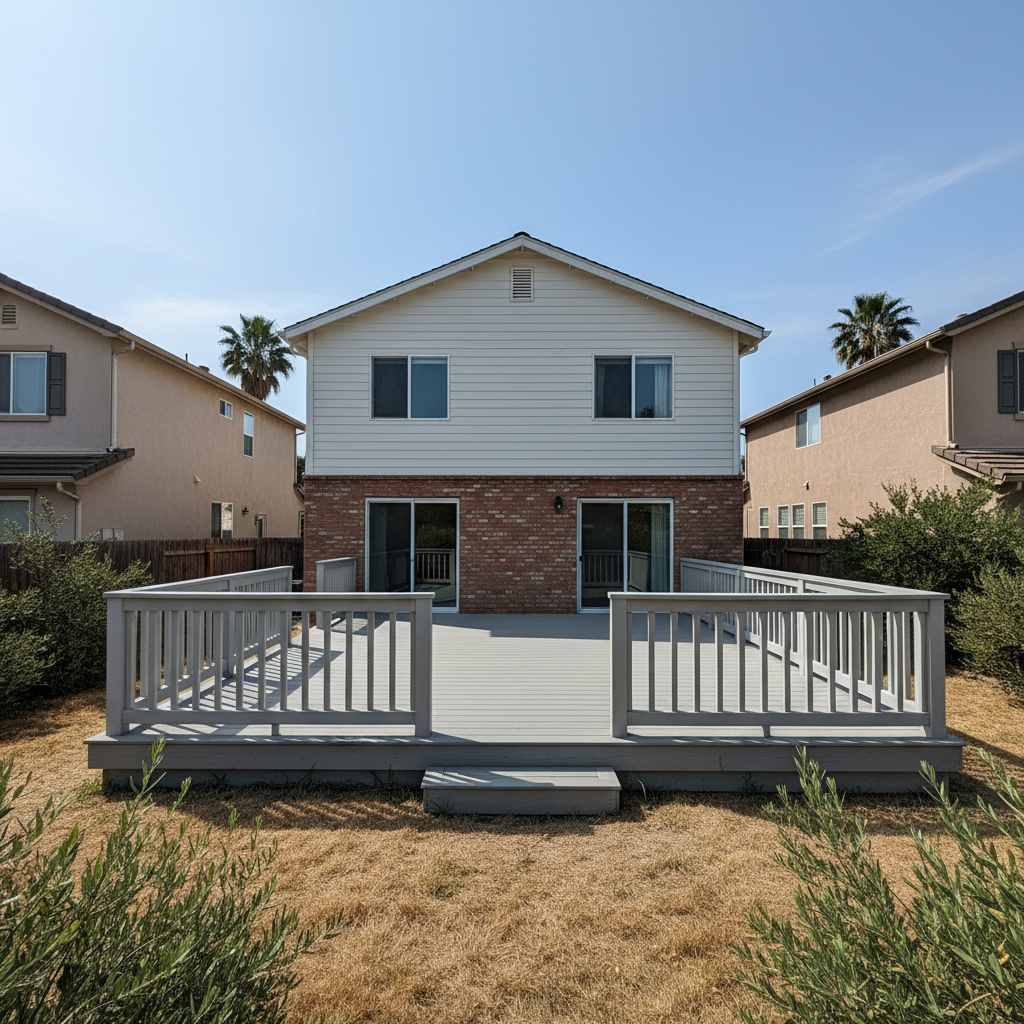
We build new decks starting with the footings, sized for the actual load the deck will carry and set below grade so they don't shift. Framing goes up in pressure-treated lumber with joist hangers rated for treated wood, then decking goes down last. We size beams and joist spans off the lumber tables for your decking material, not a guess.
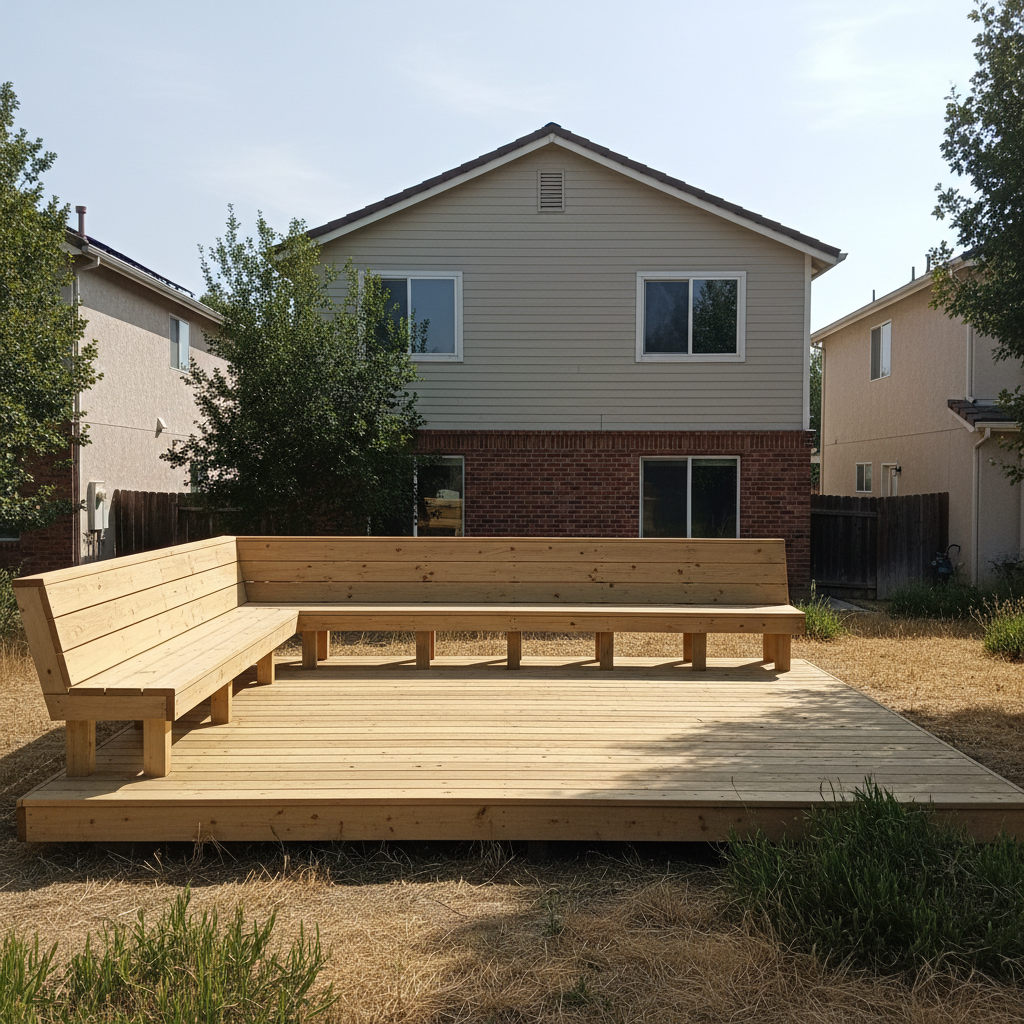
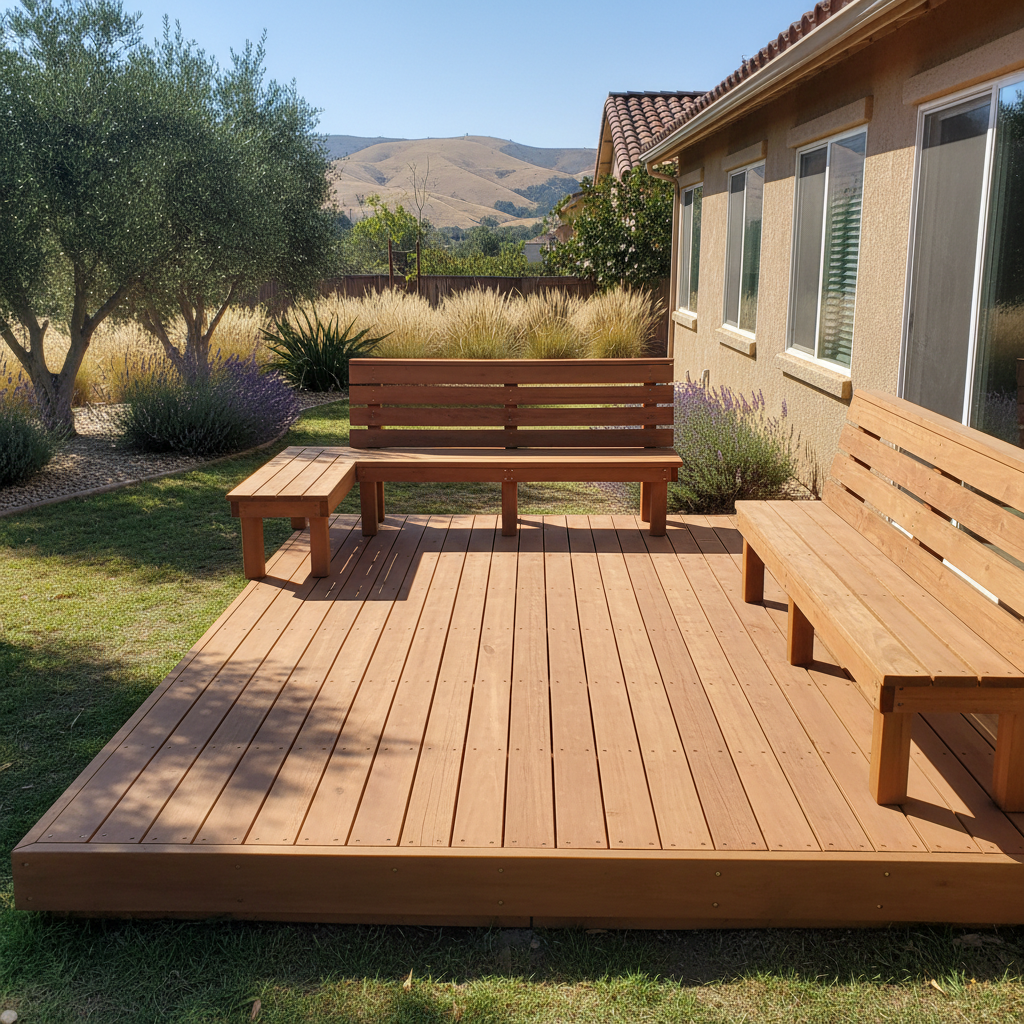
Some decks need more than a rectangle against the back of the house. We'll lay out multiple levels, built-in benches, a sunken hot tub pad, or stairs that land where your yard actually works, and draw it up before any lumber gets ordered.
Composite boards like Trex and TimberTech don't rot, splinter, or need re-staining, which is why most of our new builds go this direction now. We install with hidden fastener clips and leave the gap the manufacturer specs for heat expansion, because a composite deck laid tight in July buckles by next summer.
Most repair calls start with one soft board or a rail that moves, and end with us finding a rotted ledger board or a rusted joist hanger underneath. We replace what's actually failed, whether that's a handful of boards, the ledger connection to the house, or post bases sitting in standing water. Spot repairs on an otherwise sound frame usually run a fraction of a full rebuild.
Inland heat and direct sun fade and dry out wood decking faster than people expect, and a deck left unsealed starts checking and splitting within a couple of years out here. We pressure wash, let it dry fully, then apply a stain and sealer rated for UV, usually every two to three years depending on sun exposure.
A rail that wobbles when you lean on it is a post base problem almost every time, not a railing problem. We rebuild to current code, 36 to 42 inches high with baluster gaps under 4 inches, so the rail passes inspection and actually holds weight.
If the frame underneath is still solid, you don't need a full rebuild, just new decking on top of what's there. We pull the old boards, check every joist while they're exposed, and lay new wood or composite decking over the existing frame. It costs less than tearing the whole thing out and usually takes a couple of days.
Once the frame itself has failed, patch repairs stop making sense and a full tear-off is the honest answer. We take the old deck down, check the footings to see if they're deep enough and sound enough to reuse, and build new framing on top of them when they are.
If you're buying a house with an existing deck, or yours just hasn't been looked at in years, we'll check the ledger bolts, post bases, joist hangers, and railing connections and tell you plainly what's safe and what isn't. You get a straight answer, not a pitch for a full rebuild you don't need.
A lot of our deck clients end up wanting shade over part of it once they realize how hot that south-facing deck gets in August. We build pergolas and attached covers sized to the rafters and anchored into the existing deck framing or new posts, depending on what the deck can carry.
Four steps, and no surprises in any of them.
You tell us what you want doing, we look at what is actually there, and we ask the awkward questions early.
In writing, itemised, free. If something might add cost later we flag it now rather than at the end.
Same crew throughout. We cover your floors, keep the dust down and tidy up before we leave each day.
You point out anything you are not happy with and we fix it before the invoice, not after.
Deck construction and repair work covers El Cajon and the towns around it.
Questions that come up once a deck project is actually underway.
Describe the problem and we will tell you what it probably is. No obligation.